

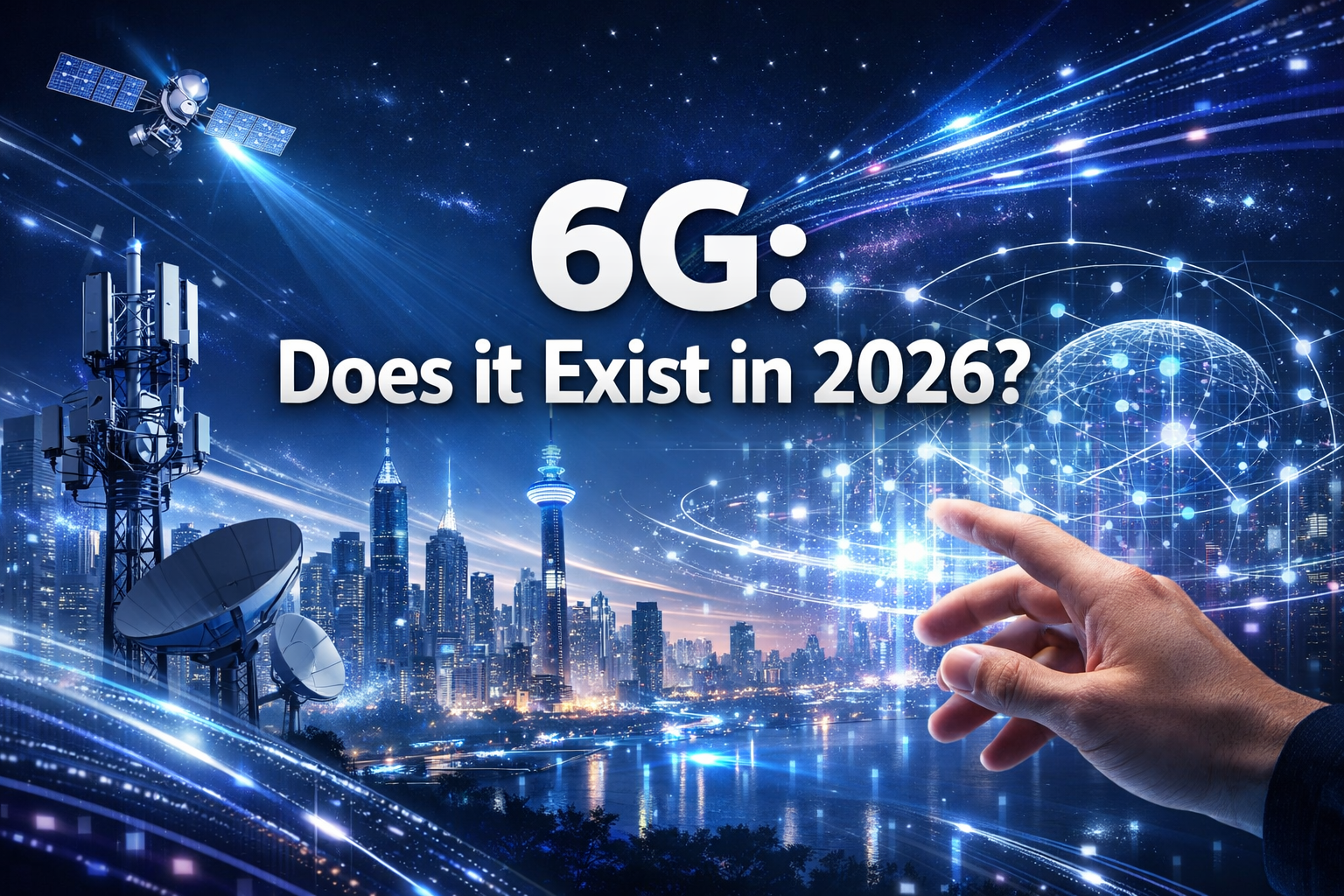
The air crackles with anticipation, a silent hum of innovation hinting at what’s next in our increasingly connected world. From the early days of 2G to the current rollout of 5G, each generation of cellular technology has reshaped our lives, promising faster speeds and more seamless interactions. But as we navigate 2026, a burning question emerges:
Looking at exist deep dive alongside where buy stronghold comprehensive gives a clearer view of the wider topic.
does 6G technology exist? Is it merely a futuristic concept, or are the building blocks already in place for the next leap in wireless communication? This article will delve deep into the reality of 6G, exploring its current status, the groundbreaking research underway, and what we can realistically expect from this nascent technology.
Understanding the progression from 5G to 6G requires an examination of where we stand today and the ambitious visions for tomorrow. While 5G is still expanding its global footprint, delivering unprecedented speeds and low latency, researchers and engineers are already looking beyond, envisioning a world where connectivity is even more ubiquitous, intelligent, and integrated into every facet of our existence. This exploration will unpack the truth behind the hype, separating genuine scientific advancement from speculative futurism regarding whether 6G technology exists.
Key Takeaways
- No Commercial 6G Yet: As of 2026, 6G technology does not exist as a commercially deployed or standardized network. It is currently in the early stages of research and development.
- Visionary Goals: 6G aims to surpass 5G with tera-bit-per-second speeds, sub-millisecond latency, and pervasive connectivity, enabling new applications like holographic communication and AI-driven networks.
- Fundamental Research: Key areas of investigation include terahertz (THz) frequencies, AI/ML integration, reconfigurable intelligent surfaces (RIS), and new security paradigms.
- Global Collaboration: Governments, academic institutions, and leading technology companies worldwide are actively contributing to 6G research and standardization efforts.
- Expected Timeline: Commercial deployment of 6G is not anticipated until the early 2030s, likely around 2030-2032, following extensive standardization.
The Current State of 6G in 2026: A Look at Reality
When we ask, “does 6G technology exist?” the answer, in a practical sense, is “not yet.” As of 2026, 6G is firmly in the realm of pre-commercial research and conceptualization. Unlike 5G, which is widely available and actively being deployed across the globe, 6G has not been standardized, and no commercial networks are operating or even being built. This period is critical, as it involves fundamental scientific exploration, theoretical modeling, and the initial prototyping of core technologies that might one day form the backbone of 6G.
Understanding the Generational Leap
Each generation of wireless technology builds upon its predecessor, introducing significant advancements. For instance, the transition from 2G to 3G brought mobile internet, 4G ushered in the smartphone era with fast data, and 5G introduced ultra-low latency, massive IoT connectivity, and enhanced mobile broadband. The jump to 6G is expected to be even more transformative, pushing the boundaries of what is currently possible.
Currently, major telecommunication companies, research institutions, and national governments are heavily investing in R&D to define what 6G will ultimately entail. These efforts are not about building a network right now, but rather about laying the theoretical and experimental groundwork. They are exploring new frequency bands, new network architectures, and new ways to integrate artificial intelligence (AI) and machine learning (ML) directly into the network’s core.
“The journey to 6G is a marathon, not a sprint. We are in the initial phase of sketching out the future, experimenting with radical ideas, and collaborating globally to ensure the next generation of connectivity is both groundbreaking and beneficial for humanity.”
Key Players in 6G Research
Many countries and corporations are vying for leadership in the 6G race. Here’s a snapshot of some prominent players:
Related Posts:



- Finland: Home to the Oulu University 6G Flagship program, one of the earliest and most comprehensive research initiatives.
- South Korea: Companies like Samsung and LG, along with the government, are heavily investing in 6G R&D, with a strong focus on future applications.
- China: Huawei and ZTE are at the forefront of exploring terahertz communication and AI-native network concepts.
- Japan: NTT Docomo and SoftBank are actively participating in international 6G forums and conducting their own research.
- United States: Several universities and tech giants, including Qualcomm and Apple, are contributing to foundational research, often through government-funded initiatives.
- European Union: Through programs like Horizon Europe, the EU supports collaborative research across member states to define and develop 6G technologies.
These entities are not just asking, “does 6G technology exist?” but are actively working to make it exist through years of dedicated research, experimentation, and eventual standardization.
The Vision for 6G: What Will It Offer?
If we project forward from 2026, what could 6G truly deliver? The vision for 6G extends far beyond just faster internet. It aims to create an intelligent, ubiquitous, and seamless communication fabric that integrates physical, digital, and human worlds. This involves an array of ambitious goals that will fundamentally alter how we interact with technology and each other.
Mind-Boggling Speed and Latency
One of the most touted features of future 6G networks will be its incredible speed and ultra-low latency. While 5G offers peak speeds of 10 gigabits per second (Gbps) and latency as low as 1 millisecond (ms), 6G targets:
- Peak Speeds: Up to 1 terabit per second (Tbps) 🚀 – that’s 100 times faster than 5G!
- Latency: Sub-millisecond (e.g., 0.1 ms) – virtually instantaneous communication.
These advancements would unlock possibilities currently unimaginable, such as holographic calls that feel like a physical presence or instantaneous data transfer for complex scientific simulations.
Pervasive Connectivity and Sensing
6G is envisioned to extend connectivity to every corner, not just for devices but for entire environments. This includes:
- Ubiquitous Coverage: Reliable high-speed connectivity everywhere, from remote rural areas to dense urban landscapes, and even within objects and materials.
- Integrated Sensing: The network itself will become a sensor. By utilizing radio waves, 6G networks could sense environments, track movements, detect obstacles, and even monitor health, creating a “digital twin” of the physical world. This could revolutionize applications in smart cities, autonomous vehicles, and remote healthcare.
AI and Machine Learning at the Core
A fundamental difference from previous generations is that 6G will be designed from the ground up to be AI-native. This means:
- AI for Network Optimization: AI will manage and optimize network resources, predict traffic patterns, ensure efficient energy usage, and self-heal network issues, making it incredibly resilient and efficient.
- AI as a Service: The network could offer AI capabilities as a service, allowing devices with limited processing power to offload complex AI tasks to the network edge, enabling truly intelligent devices everywhere.
Learn more about how technology affects critical thinking and how these new capabilities could shape our cognitive processes.
New Applications and Use Cases
The extraordinary capabilities of 6G will give rise to entirely new applications, including:
- Holographic Communication: Realistic 3D projections of people or objects interacting in real-time, blurring the lines between physical and virtual presence.
- Extended Reality (XR) Immersion: Fully immersive virtual and augmented reality experiences with no lag, enabling realistic metaverse applications, advanced gaming, and hyper-realistic training simulations.
- Connected Robotics and Autonomous Systems: Ultra-reliable low-latency communication (URLLC) will enable complex coordination of autonomous vehicles, drones, and industrial robots, leading to fully automated logistics and smart factories.
- Digital Twins: Real-time virtual replicas of physical objects, processes, or even entire cities, used for monitoring, analysis, and predictive maintenance.
- Sustainable Connectivity: 6G aims to be significantly more energy-efficient than previous generations, contributing to greener technology.
The Technological Building Blocks: Making 6G a Reality
To answer the question, does 6G technology exist in terms of foundational elements, the answer is “yes, some of the underlying research and experimental components are actively being developed.” Realizing the ambitious vision of 6G requires breakthroughs in several key technological areas.
Terahertz (THz) Communication
One of the most significant shifts for 6G will be the move to higher frequency bands, specifically the terahertz (THz) spectrum (0.1 THz to 10 THz) [1]. Why THz?
- Massive Bandwidth: THz waves offer vast amounts of unused spectrum, enabling the ultra-high data rates targeted by 6G.
- Challenges: THz waves have very poor propagation characteristics. They are easily absorbed by obstacles, water vapor, and even air, leading to short communication ranges and high path loss.
- Solutions: This requires innovations in:
- Beamforming: Highly directional antennas that precisely focus signals to overcome path loss.
- New Materials: Development of materials that interact effectively with THz waves.
- Advanced Transceivers: Miniaturized, energy-efficient THz transmitters and receivers.
Reconfigurable Intelligent Surfaces (RIS)
To combat the propagation challenges of THz frequencies and enhance coverage, Reconfigurable Intelligent Surfaces (RIS) are a promising solution.
- How RIS Works: These are essentially smart surfaces (like a wall or a panel) embedded with many tiny, programmable elements. They can intelligently reflect, refract, or absorb radio waves, dynamically shaping the wireless environment.
- Benefits:
- Extended Coverage: Bouncing signals around obstacles to reach devices that would otherwise be out of range.
- Improved Signal Quality: Directing signals to avoid interference and enhance strength.
- Energy Efficiency: Reducing the power needed by base stations and devices by optimizing signal paths.
- Passive Operation: Many RIS designs are passive, meaning they don’t consume much power themselves.
AI and Machine Learning Integration
As mentioned, AI is not just an application on 6G; it’s an integral part of 6G.
- AI-Native Air Interface: AI will manage the radio spectrum, optimize resource allocation, and even adapt modulation schemes in real-time.
- Network Slicing with AI: Creating customized virtual networks for different services (e.g., ultra-reliable for autonomous cars, high-bandwidth for holographic calls) will be dynamically managed by AI.
- Predictive Maintenance: AI will analyze network data to anticipate and prevent outages, ensuring unprecedented reliability.
Explore more about what is a domain in information technology and how AI could interact with and manage these domains in future networks.
Advanced Antenna Technologies
Beyond traditional MIMO (Multiple-Input Multiple-Output), 6G will push the boundaries of antenna design.
- Extreme Massive MIMO: Employing thousands of antenna elements to create highly focused beams and support many users simultaneously.
- Holographic Antennas: Antennas that can generate complex electromagnetic fields, potentially enabling new ways to communicate and sense.
- Integrated Antennas: Antennas embedded into everyday objects and surfaces for truly pervasive connectivity.
Blockchain and Distributed Ledger Technologies (DLT)
Security, privacy, and trust are paramount for 6G, especially with the deep integration of AI and pervasive sensing.
- Decentralized Security: Blockchain could provide decentralized authentication, secure data sharing, and robust identity management.
- Trust Management: Ensuring the integrity of data collected by IoT devices and sensors within the 6G ecosystem.
Quantum Technologies
While still largely theoretical for current communication systems, quantum technologies might play a role in 6G.
- Quantum Cryptography: Providing unbreakable encryption for sensitive data.
- Quantum Sensing: Potentially enhancing the network’s sensing capabilities far beyond classical limits.
The development of these building blocks is ongoing globally. For instance, some countries are also exploring advanced military applications of similar technologies, such as does India have hypersonic missile technology which relies on cutting-edge engineering and materials science, mirroring the intensity of 6G research.
Standardization and Global Collaboration
The path from research to deployment for any cellular generation is paved by international standardization. To answer, does 6G technology exist in a usable, global format, we must consider the role of standardization bodies.
The Role of 3GPP and ITU
The 3rd Generation Partnership Project (3GPP) is the primary standardization body for mobile telecommunications. It brings together telecommunications associations from around the world to develop specifications for mobile broadband technologies. For 6G, 3GPP will be instrumental in defining:
- Radio Access Technology (RAT): How devices connect to the network.
- Core Network Architecture: The backbone infrastructure of the network.
- Protocols and Interfaces: Ensuring interoperability between different manufacturers and operators.
The International Telecommunication Union (ITU), a specialized agency of the United Nations, plays a crucial role in regulating international radio spectrum and promoting global cooperation in telecommunications. The ITU will likely define the overall framework and high-level requirements for what it calls “IMT-2030” (International Mobile Telecommunications beyond 2020, which is the ITU’s designation for 6G).
Current Standardization Efforts
As of 2026, formal 6G standardization by 3GPP has not yet begun. This process typically starts once the fundamental research has matured, and the industry has a clearer consensus on the core technologies and use cases. The current activities focus on:
- Pre-standardization Research: Universities and companies are publishing research papers, running simulations, and building experimental prototypes.
- White Papers and Vision Documents: Leading organizations are releasing vision documents outlining their desired features and capabilities for 6G.
- Working Groups and Forums: Various global forums and alliances (e.g., Next G Alliance in North America, Hexa-X in Europe) are facilitating discussions and collaboration among industry stakeholders to build consensus on key requirements and technological directions.
These collaborative efforts are crucial to avoid fragmentation and ensure that when 6G eventually rolls out, it is a globally interoperable standard, much like 5G and previous generations.
The 6G Timeline: When Can We Expect It?
Given the answer to “does 6G technology exist” is currently “no,” the next logical question is, “when will it?” The development of new cellular generations follows a predictable pattern, from research to standardization to deployment.
Typical Lifecycle of a G-Generation
| Phase | Approximate Duration | Description |
|---|---|---|
| Research & Vision | 5-7 years | Fundamental scientific exploration, theoretical modeling, proof-of-concept prototypes, white papers, and vision setting. (Current Phase for 6G: ~2020-2027) |
| Standardization | 3-5 years | Industry collaboration via bodies like 3GPP and ITU to define technical specifications, protocols, and interfaces. |
| Initial Deployment | 1-2 years | First commercial network launches, often in select urban areas. Operators begin rolling out infrastructure. |
| Widespread Adoption | 5-10+ years | Network coverage expands globally, device ecosystem matures, and diverse applications become common. |
6G Projections
Based on this typical lifecycle and the current pace of research, here’s a realistic timeline for 6G:
- 2020-2027: Intensive research and development phase. Defining the foundational technologies and use cases.
- 2027-2030: Formal standardization process begins, with 3GPP and ITU defining the technical specifications.
- 2030-2032: Initial commercial deployment of 6G networks expected. This is when we might see the first 6G-enabled devices and services in select regions.
- 2032 onwards: Gradual expansion and widespread adoption of 6G globally.
Therefore, while the concept of 6G is certainly alive and well in 2026, its commercial reality is still several years away. Patience will be key as the industry meticulously builds the infrastructure for this transformative technology.
This long development cycle underscores the complexity and investment required for each new generation of wireless technology. It’s a process of continuous innovation, much like the evolution of what is information technology itself.
Challenges and Considerations for 6G
Even with all the excitement, the path to 6G is fraught with significant challenges that researchers and policymakers must address.
Technical Hurdles
- Terahertz Transceiver Design: Developing compact, energy-efficient, and cost-effective transceivers for THz frequencies is extremely difficult due to the complex physics involved [2].
- Power Consumption: The processing power required for AI-native networks and the energy demands of THz components could lead to high power consumption, which contradicts sustainability goals.
- Interference Management: With pervasive sensing and extreme spectral reuse, managing interference will be a monumental task.
- Channel Modeling: Accurately modeling THz channels, especially in dynamic environments with RIS, is a complex research area.
Regulatory and Spectrum Issues
- Spectrum Allocation: Globally harmonizing THz spectrum for 6G will require significant international cooperation and negotiation, a process that can take years.
- Health and Safety: As frequencies increase, public concerns about potential health effects of new electromagnetic radiation levels will need to be addressed with robust scientific research and transparent communication.
Security and Privacy Concerns
- Pervasive Sensing Data: If 6G networks act as ubiquitous sensors, the sheer volume and granularity of collected data raise profound privacy implications. How will this data be protected, and who will have access?
- AI Vulnerabilities: AI-driven networks could be susceptible to new forms of cyberattacks, requiring novel security architectures.
- Supply Chain Security: Ensuring the integrity and trustworthiness of 6G infrastructure components will be critical, especially in a geopolitical landscape.
These challenges highlight the need for a holistic approach to 6G development, considering not just technological feasibility but also ethical, societal, and economic impacts.
The Impact of 6G on Society and Economy
The deployment of 6G, when it eventually arrives, promises to have a profound impact on nearly every aspect of society and the global economy. This future reality is what drives the current answer to “does 6G technology exist?” by fueling ongoing research.
Economic Transformation
- New Industries and Jobs: 6G will spawn entirely new industries based on holographic communication, advanced XR, and pervasive AI sensing, creating millions of new jobs.
- Increased Productivity: Automation, digital twins, and AI-driven insights will significantly boost productivity across sectors from manufacturing to healthcare.
- Economic Growth: Countries and regions that lead in 6G development and deployment are likely to experience substantial economic advantages.
Societal Changes
- Enhanced Healthcare: Remote surgery, AI-powered diagnostics, and personalized medicine could become commonplace. Learn more about how technology helps doctors.
- Revolutionized Education: Immersive learning environments and real-time holographic instruction could transform educational delivery.
- Smarter Cities and Infrastructure: AI-managed traffic, energy grids, and public services will lead to more efficient and livable urban environments.
- Accessibility: 6G could offer new ways to connect and empower individuals with disabilities, breaking down communication barriers.
Ethical and Philosophical Questions
- Digital Divide: Without equitable access, 6G could exacerbate the existing digital divide, leaving some populations behind.
- Human-Machine Interaction: The deep integration of AI and ubiquitous sensing will raise new questions about human agency, autonomy, and the nature of reality.
- Surveillance: The potential for pervasive sensing to be misused for surveillance purposes demands robust ethical frameworks and regulatory oversight.
Considering these far-reaching implications, the development of 6G is not just a technological pursuit but a societal responsibility. Understanding what are the roles of technology in society helps us frame these discussions properly.
Conclusion
So, does 6G technology exist in 2026? The definitive answer is no, not as a commercial network or a unified standard. It is, however, a vibrant and rapidly evolving field of research and development. From fundamental explorations into terahertz frequencies and reconfigurable intelligent surfaces to the deep integration of artificial intelligence, the groundwork for 6G is being meticulously laid by brilliant minds across the globe.
While the vision of holographic communication, pervasive sensing, and multi-Tbps speeds is captivating, the journey to realize 6G is long and complex. We are in the discovery phase, with significant technical hurdles, regulatory challenges, and ethical considerations still to be addressed. Current projections suggest that the first commercial 6G networks will likely emerge around 2030-2032. Until then, the focus remains on robust research, collaborative standardization, and thoughtful planning to ensure that the next generation of connectivity is not only technologically advanced but also beneficial and equitable for all.
The future of connectivity is being forged now, in laboratories and research centers, shaping a world that will be more interconnected, intelligent, and immersive than ever before.
Actionable Next Steps:
- Stay Informed: Follow reputable technology news outlets and research institutions for updates on 6G advancements.
- Engage in Discussion: Participate in conversations about the ethical and societal implications of future technologies.
- Support Research: Encourage investment in fundamental scientific research that pushes the boundaries of innovation.
- Understand Current Tech: Familiarize yourself with the capabilities and limitations of 5G, as it forms the foundation for 6G. For more insights into emerging tech, visit CyberTechie blog.
References
[1] Rappaport, T. S., et al. “Wireless Communications and Applications Above 100 GHz: Opportunities and Challenges for 6G and Beyond.” IEEE Access, vol. 7, 2019, pp. 78724-78753. [2] Akyildiz, I. F., et al. “TeraHertz (THz) Communication for 6G Wireless Systems.” IEEE Wireless Communications, vol. 26, no. 4, 2019, pp. 100-107.
Frequently Asked Questions About 6G
How to Understand the Development of 6G Technology
Key 6G Terminology
- Terahertz (THz) Communication
- A frequency band ranging from 0.1 THz to 10 THz, targeted for 6G to achieve ultra-high data rates due to its massive bandwidth. It faces challenges with signal propagation.
- Reconfigurable Intelligent Surfaces (RIS)
- Smart surfaces embedded with programmable elements that can intelligently reflect, refract, or absorb radio waves. Used in 6G to enhance coverage and improve signal quality, especially in THz frequencies.
- AI-Native Network
- A network architecture where Artificial Intelligence (AI) and Machine Learning (ML) are fundamental, integrated components from the ground up, managing and optimizing network resources rather than just being applications running on the network.
- Ultra-Reliable Low-Latency Communication (URLLC)
- A capability of advanced wireless networks (like 5G and 6G) that provides extremely high reliability and very low latency, critical for applications such as autonomous vehicles, industrial automation, and remote surgery.
- Digital Twin
- A real-time virtual replica of a physical object, process, or system. In the context of 6G, pervasive sensing could enable the creation of highly detailed digital twins for monitoring, analysis, and predictive maintenance.